


The 2026 GMC Acadia continues the full platform redesign that repositioned it as a true midsize three row SUV. This is not a light refresh. The architecture, powertrain strategy, interior packaging, and trim separation were all reworked to serve families who need consistent third row usability, stronger towing confidence, and modern driver assistance technology.
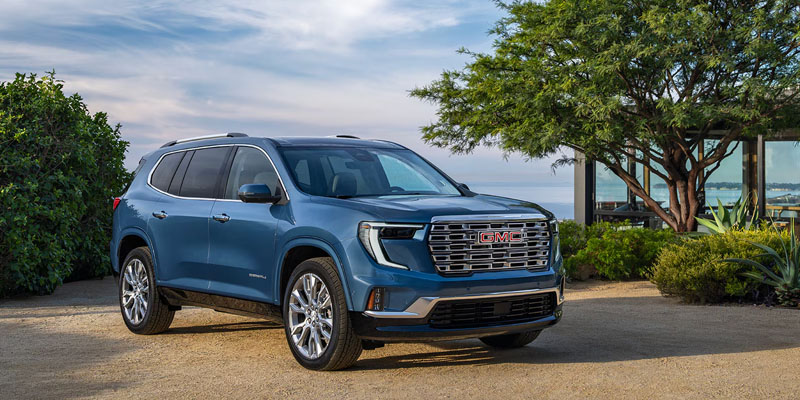
This breakdown focuses on how the systems function in real world use and what matters when choosing between trims.
A Larger Platform Built for Real Third Row Use
The current Acadia rides on GM’s updated midsize SUV architecture shared with the Chevrolet Traverse. Compared to the prior generation, the wheelbase is longer and the body footprint is larger.
That structural change delivers measurable gains:
- Increased third row legroom
- Greater cargo space behind the third row
- Improved maximum cargo volume with seats folded
- Wider track for enhanced lateral stability
A longer wheelbase improves highway tracking by spreading vehicle weight across a larger footprint. On uneven pavement, pitch motion is reduced because suspension events occur farther apart. For passengers in the third row, this translates into smoother ride quality and more usable leg positioning.
Families cross shopping Ford Explorer, Toyota Grand Highlander, and Kia Telluride will notice the Acadia now competes directly in interior volume rather than functioning as a smaller alternative.
Turbocharged Power Designed for Loaded Driving
The 2026 Acadia replaces the previous naturally aspirated V6 with a 2.5 liter turbocharged inline four cylinder paired to an eight speed automatic transmission.
Power output is approximately:
- 328 horsepower
- 326 lb ft of torque
The key difference is torque curve behavior. Turbocharged engines build peak torque earlier in the rev range compared to naturally aspirated engines. That changes how the SUV feels under load.
In practical use, this benefits:
- Highway merging with passengers onboard
- Low speed acceleration from stop lights
- Hill climbing while carrying cargo
- Towing response without excessive downshifting
The eight speed automatic transmission helps maintain engine operation within the optimal torque band. Gear spacing is closer than older six speed transmissions, reducing abrupt RPM jumps and improving smoothness.
For drivers accustomed to V6 delivery, the turbo four will feel more immediate at lower RPM and more controlled during steady highway cruising.
Trailering Confidence for Recreational Use
When properly equipped, the 2026 GMC Acadia can tow up to approximately 5,000 pounds. That capacity is supported by the engine’s high torque output and reinforced cooling systems.
Trailering support systems include:
- Trailer sway control integrated into stability management
- Hitch guidance camera views
- Available multi camera visibility configurations
- Available all wheel drive for traction distribution
The available all wheel drive system is electronically controlled. It can distribute torque between front and rear axles depending on traction needs. In slippery conditions or while pulling a load, torque transfer improves stability and reduces front wheel slip.
For owners towing small campers, boats, or utility trailers, the Acadia’s torque curve and stability systems are engineered to reduce steering correction and driver fatigue.
Trim Strategy Aligned With Lifestyle Priorities
The Acadia lineup separates clearly into Elevation, AT4, and Denali. Each trim supports a different ownership profile.
Elevation
Elevation focuses on core three row capability and technology without moving into premium interior materials.
Best suited for:
- Families prioritizing space and safety technology
- Buyers seeking strong standard features
- Daily commuting with occasional cargo hauling
AT4
AT4 is engineered for drivers who regularly encounter gravel roads, uneven terrain, or seasonal weather conditions.
Mechanical enhancements include:
- Off road tuned suspension
- Increased ground clearance
- All terrain tires
- Active Torque Control all wheel drive
The Active Torque Control system uses a twin clutch rear drive unit capable of sending torque side to side across the rear axle. This allows more precise traction management than basic open differential AWD systems.
For boat ramps, muddy access roads, or light trail driving, this torque vectoring improves forward motion without excessive wheel spin.
Denali
Denali emphasizes interior refinement and advanced driver assistance technology.
Highlights include:
- Premium interior materials
- Enhanced digital displays
- Available Super Cruise hands free driving
Super Cruise operates on pre mapped highways using LiDAR based mapping data, forward radar, adaptive cruise control, and a driver monitoring camera. The system allows hands free operation on compatible roads while ensuring driver attention through eye tracking.
For high mileage commuters, this system can reduce fatigue while maintaining lane position and speed control.
Technology That Supports Daily Operation
The Acadia features a 15 inch vertically oriented infotainment screen integrated with Google built in services. The vertical layout improves map readability and allows multiple information panels to remain visible.
Technology integration includes:
- Wireless Apple CarPlay and Android Auto
- Over the air software updates
- Digital driver information display
Standard GMC Pro Safety features include:
- Forward collision alert
- Automatic emergency braking
- Lane keep assist with lane departure warning
- Blind zone steering assist
These systems rely on radar sensors and forward facing cameras. They provide alerts and corrective inputs designed to assist rather than override driver control.
Long Term Ownership and Reliability Considerations
The shift from V6 to turbocharged four cylinder raises questions for some buyers. Modern turbocharged engines are engineered with reinforced internal components and advanced cooling systems to manage higher cylinder pressures.
Long term reliability depends on:
- Adhering to oil change intervals
- Maintaining cooling system health
- Using correct fuel grade as recommended
- Avoiding prolonged heavy load operation without cooldown
The eight speed transmission has been refined across multiple GM platforms, contributing to smoother long term performance compared to earlier six speed units.
Competitive Positioning in the Midsize Segment
Against primary competitors, the Acadia stands out in several areas:
- Higher torque output in standard configuration
- Distinct off road capability in AT4 trim
- Availability of Super Cruise driver assistance
When evaluating midsize SUVs, buyers should compare:
- Third row comfort in person
- Torque delivery under load
- AWD system sophistication
- Infotainment interface usability
The 2026 GMC Acadia is no longer positioned as a smaller three row option. It is a full midsize SUV engineered to handle family transport, recreational towing, and evolving driver assistance technology with confidence.
For drivers evaluating the 2026 GMC Acadia in the Hammond area, Ross Downing GMC can help you compare trim configurations and determine which system package best aligns with your daily driving demands.
Connect with us


