



The GMC Yukon is one of the most consistently cross shopped full size SUVs on the used market. Buyers typically want clarity on three things: which years offer the strongest reliability, what changed in the 2021 redesign, and which trim level makes sense for towing, family hauling, or long term ownership.
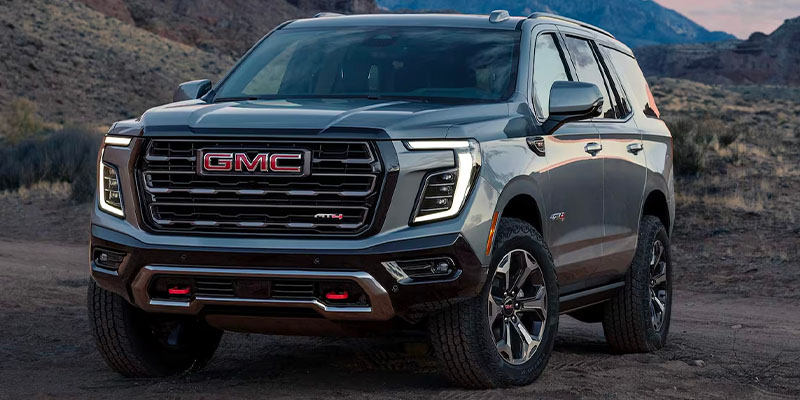
This guide breaks down the 2018 through 2025 model years by generation, mechanical architecture, and real world use case so you can evaluate the Yukon as a system, not just a badge.
Generation Comparison: 2018–2020 vs 2021–2025
The most important dividing line in the used Yukon market is the 2021 redesign.
2018–2020 Yukon: Traditional Full Size Architecture
These models ride on GM’s prior body on frame platform with:
- Solid rear axle suspension
- Hydraulic power steering
- Proven 5.3L or 6.2L V8 engines
- Six speed automatic early in the generation, transitioning to ten speed
The solid rear axle design favors durability and heavy load consistency. For buyers towing regularly or carrying cargo at maximum capacity, this traditional setup offers predictable behavior and strong long term reliability.
Tradeoffs include:
- Higher rear floor height
- Slightly firmer ride over broken pavement
- Less third row legroom compared to newer models
These years are often considered safe long term ownership choices due to the simplicity and maturity of the platform.
2021–2025 Yukon: Independent Rear Suspension and Platform Redesign
The 2021 redesign introduced:
- Independent rear suspension
- Longer wheelbase
- Available 3.0L Duramax turbo diesel
- Fully redesigned interior
- Magnetic Ride Control and available Air Ride Adaptive Suspension
The shift to independent rear suspension is the most significant mechanical change. Instead of a single solid axle connecting both rear wheels, each rear wheel moves independently. This improves:
- Ride comfort over uneven pavement
- Third row legroom
- Cargo floor height
- Handling composure at highway speeds
For families prioritizing daily comfort and interior usability, the 2021 and newer models represent a major upgrade.
Engine Options and Powertrain Differences
Across 2018–2025, the Yukon typically offers three engine choices.
5.3L V8
- Approximately 355 horsepower
- 383 lb ft of torque
- Direct injection V8 architecture
This engine balances towing capability with manageable fuel consumption. It is widely considered durable when maintained properly.
6.2L V8
- Approximately 420 horsepower
- 460 lb ft of torque
- Standard in Denali trims
The 6.2L offers stronger acceleration and higher torque output for heavier towing. It is best suited for buyers frequently pulling boats or travel trailers.
3.0L Duramax Turbo Diesel (2021 and newer)
- Approximately 277 horsepower
- 460 lb ft of torque
- Inline six turbo diesel configuration
The diesel option delivers strong low RPM torque and improved highway fuel efficiency. For drivers covering long distances or towing moderate loads, the diesel provides a different ownership experience focused on torque efficiency and range.
All modern Yukons are paired with a ten speed automatic transmission. The ten speed allows tighter gear spacing, keeping the engine within its optimal torque range. This improves both towing smoothness and highway efficiency.
Trim Strategy and Real World Fit
Used Yukons typically appear in SLE, SLT, AT4, and Denali trims.
SLE and SLT
These trims focus on core capability:
- Strong safety suite
- Available four wheel drive
- Cloth or leather seating depending on configuration
Best suited for buyers who prioritize functionality and value over premium interior finishes.
AT4
Introduced with the redesign, AT4 is engineered for off pavement confidence.
Key features include:
- Active Response 4WD system
- Skid plates
- All terrain tires
- Off road tuned suspension
The Active Response system can actively manage torque distribution between axles. For gravel roads, boat ramps, or seasonal weather conditions, AT4 provides improved traction without aftermarket modifications.
Denali
Denali emphasizes refinement and technology.
Common features include:
- 6.2L V8 standard
- Magnetic Ride Control
- Premium interior materials
- Advanced driver assistance systems
Magnetic Ride Control uses magnetorheological fluid in the shock absorbers. Sensors read road conditions in milliseconds and adjust suspension firmness in real time. This system improves both ride comfort and body control under acceleration and braking.
Towing Capacity by Configuration
Depending on engine and drivetrain configuration, used Yukons can tow up to approximately 8,400 pounds.
Towing performance depends on:
- Rear axle ratio
- Two wheel drive vs four wheel drive
- Engine selection
- Cooling package
Buyers planning to tow should verify the specific configuration rather than relying solely on maximum advertised figures.
Yukon vs Yukon XL
The Yukon XL extends wheelbase and cargo length.
Differences include:
- Increased cargo space behind the third row
- Greater maximum cargo volume
- Slightly larger turning radius
For families who frequently travel with luggage or sports equipment, the XL provides added space without moving into heavy duty truck territory.
Reliability and Longevity Expectations
Common ownership questions center on longevity.
With proper maintenance, Yukons regularly exceed:
- 200,000 miles in service life
- Long term durability in both V8 and diesel configurations
Maintenance considerations include:
- Oil change intervals
- Transmission fluid service
- Suspension component wear
- Brake system upkeep
The pre 2021 models are often viewed as mechanically simpler. The post 2021 models offer improved ride comfort and technology but include more complex systems such as air suspension and advanced electronics.
Neither generation is inherently unreliable, but complexity should align with ownership expectations and maintenance discipline.
Choosing the Right Used Yukon
For buyers prioritizing mechanical simplicity and traditional durability, 2018–2020 models offer proven architecture and lower system complexity.
For buyers prioritizing interior space, ride comfort, and updated technology, 2021–2025 models provide substantial improvements.
When comparing trims and years, evaluate:
- Intended towing weight
- Third row frequency of use
- Desired suspension type
- Engine preference
- Long term maintenance tolerance
The used GMC Yukon remains one of the strongest full size SUV options for buyers who need real towing capability, three row space, and long term durability.
If you are evaluating used Yukon inventory in the Hammond area, Ross Downing GMC can help you compare available configurations and determine which generation and trim align best with your driving demands.
Connect with us


