



GMC AC service becomes more important before Louisiana summer heat arrives because extreme temperatures, humidity, airflow restriction, and refrigerant pressure changes place additional strain on SUV cooling systems. Drivers preparing for Louisiana summers are not just trying to make the cabin colder. They are trying to maintain steady airflow, reduce delayed cooldown times, and keep passengers comfortable during high humidity and long periods of heat exposure.
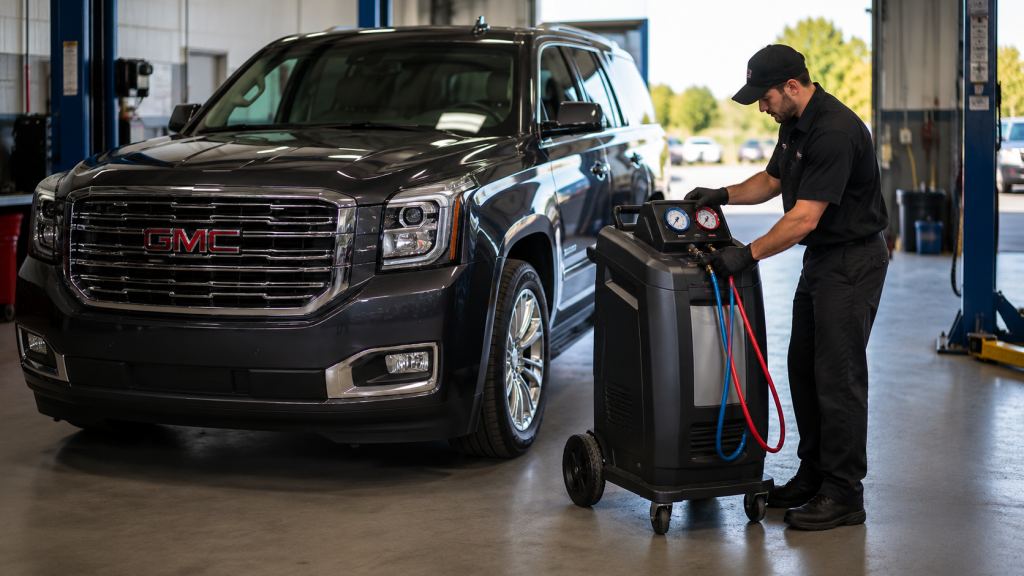
How GMC SUV AC Systems Create Cold Air
How does a vehicle AC system create cold air? A vehicle air conditioning system removes heat from cabin air by circulating refrigerant through a closed pressure cycle. The refrigerant absorbs heat inside the cabin and releases that heat outside the SUV before repeating the process again.
Inside a GMC SUV, the AC compressor pressurizes refrigerant and moves it through the system. Once pressurized, the refrigerant travels to the condenser near the front of the vehicle. The condenser releases heat collected from inside the cabin. After that heat leaves the system, the refrigerant continues toward the evaporator where cabin air passes across cooled surfaces before entering the vents.
This process matters because cooling problems are not always caused by a single failed component. Weak cooling can develop from refrigerant loss, airflow restriction, compressor wear, condenser blockage, or blower motor weakness.
Drivers sometimes assume cold air comes directly from the AC controls themselves. The controls are only managing airflow direction, temperature requests, and fan speed. The actual cooling process relies on pressure balance, heat transfer, and airflow movement throughout the HVAC setup.
The GMC AC service process should evaluate:
• Refrigerant pressure balance
• Compressor operation
• Cabin vent temperature consistency
• Condenser airflow condition
• Interior airflow strength
These inspections help identify cooling problems before Louisiana heat pushes the system beyond its normal operating range.
Louisiana Summer Heat Changes Cooling Performance
Why does AC cooling weaken during extreme heat? High outside temperatures force the air conditioning system to remove more heat from the cabin while also fighting against hotter ambient air surrounding the vehicle.
Louisiana humidity adds another challenge because moisture in the air changes how quickly passengers feel cooled inside the cabin. Even when vent temperatures remain cold, high humidity can make the interior feel warmer longer because moisture slows perceived comfort.
Large SUVs like the GMC Yukon or Acadia also retain substantial heat after sitting outside. Interior materials, glass surfaces, and dark trim absorb heat throughout the day. When drivers first start the SUV, the AC system must remove both trapped heat and humidity simultaneously.
Cooling performance may also change at idle. When the vehicle is moving, airflow passes naturally through the condenser mounted at the front of the SUV. That airflow helps release heat more efficiently. While stopped in traffic or parked, condenser cooling relies more heavily on electric fans to maintain airflow across the system.
This is why some drivers notice colder AC temperatures while driving at highway speeds compared to sitting at a stoplight.
Louisiana summer driving places additional pressure on:
• Condenser cooling efficiency
• Refrigerant pressure stability
• Cabin cooldown timing
• Interior humidity reduction
• Compressor cycling frequency
Extreme heat exposes weak components quickly because the cooling system operates under heavier strain for longer periods.
Cabin Airflow Restrictions Can Mimic Cooling Problems
Why does airflow become weaker over time? Weak airflow usually develops from restriction inside the HVAC airflow path rather than direct refrigerant failure. The cabin air filter is one of the most common causes.
The cabin filter traps dust, pollen, debris, and airborne particles before air enters the passenger compartment. Over time, the filter surface becomes restricted. When airflow struggles to move through the filter, vent output weakens even if the refrigerant system itself is still cooling properly.
This distinction matters because drivers sometimes assume warm cabins automatically mean the refrigerant is low. In some cases, airflow volume is the larger problem. Reduced airflow prevents cooled air from circulating effectively throughout the SUV interior.
SUV cabin size also plays a role. Larger passenger compartments require more airflow volume to cool rear seating areas evenly. Restricted airflow can create uneven temperatures between front and rear rows during hot weather.
Drivers should pay attention to warning signs like:
• Reduced airflow at higher fan settings
• Longer cabin cooldown times
• Uneven temperatures between vents
• Dust buildup near vent openings
• Musty odor during startup
Odors can develop when moisture accumulates near the evaporator area. Louisiana humidity can increase this problem because damp conditions allow buildup inside the HVAC housing.
Compressor Operation and Early Warning Signs
What causes warm air at idle? Warm air during idle periods can point toward compressor wear, condenser cooling problems, refrigerant pressure imbalance, or cooling fan issues.
The compressor acts as the heart of the AC system because it keeps refrigerant moving through the pressure cycle. As compressors age, internal wear can reduce pressure efficiency. That reduction becomes easier to notice during extreme heat or low speed driving when the system works harder to maintain cooling.
Compressor cycling patterns also matter. The compressor turns on and off to regulate pressure throughout operation. Rapid cycling, delayed engagement, or unusual noises may indicate developing mechanical problems.
Drivers should also watch for situations where:
• Vent temperatures fluctuate rapidly
• Cooling weakens while stopped
• AC performance changes unpredictably
• Clicking or grinding sounds appear
• Defrost performance weakens during humidity
These warning signs may appear gradually before complete cooling loss occurs. Waiting until the system stops cooling entirely can allow additional strain on surrounding HVAC components.
A GMC AC service inspection should evaluate compressor operation under load, not only during a quick visual inspection. Louisiana heat creates conditions where smaller weaknesses become more noticeable.
What Drivers Should Inspect Before Summer Begins
What should drivers inspect before summer begins? Summer preparation should focus on cooling efficiency, airflow quality, and early warning signs before temperatures climb into peak heat ranges.
Preventive inspection matters because AC systems rarely fail instantly without warning. Cooling performance usually changes gradually through weaker airflow, inconsistent temperatures, delayed cooldown, or idle related issues.
Before summer arrives, GMC drivers should evaluate:
• Cabin vent temperature consistency
• Airflow strength across all fan settings
• Cabin air filter condition
• Cooling performance while stopped
• Unusual noises during AC operation
Drivers should also monitor how quickly the cabin cools after sitting in direct sunlight. Delayed cooldown times can reveal developing pressure or airflow problems before total cooling loss occurs.
For Louisiana drivers near Ross Downing GMC, early HVAC inspections are useful because summer temperatures create long periods of sustained cooling demand. Identifying refrigerant loss, airflow restrictions, or compressor wear before peak heat arrives can help prevent larger cooling failures later in the season.
What GMC Drivers Should Take Away Before Summer Arrives
GMC AC service is not only about making the cabin colder. The system is managing refrigerant pressure, heat transfer, humidity reduction, airflow circulation, and condenser cooling all at the same time. Louisiana summer temperatures place additional strain on every part of that process.
Drivers should pay close attention to airflow consistency, idle cooling performance, cabin cooldown timing, and unusual HVAC changes before summer reaches peak heat levels. Early inspection gives technicians more opportunity to identify smaller cooling issues before extreme temperatures expose larger failures.
Connect with us


