


Towing capability is often measured in pounds, but for most drivers, the real challenge is not how much a vehicle can tow. It is how confidently and consistently that load can be managed on the road. Many shoppers researching GMC trucks and SUVs are trying to understand what features like ProGrade Trailering, Hitch Guidance, and trailer camera systems actually do, and how they change the towing experience. GMC approaches towing as a connected system rather than a collection of individual features, combining cameras, sensors, and vehicle controls to reduce guesswork and improve stability. Understanding how these systems work helps explain why towing technology matters just as much as towing capacity.
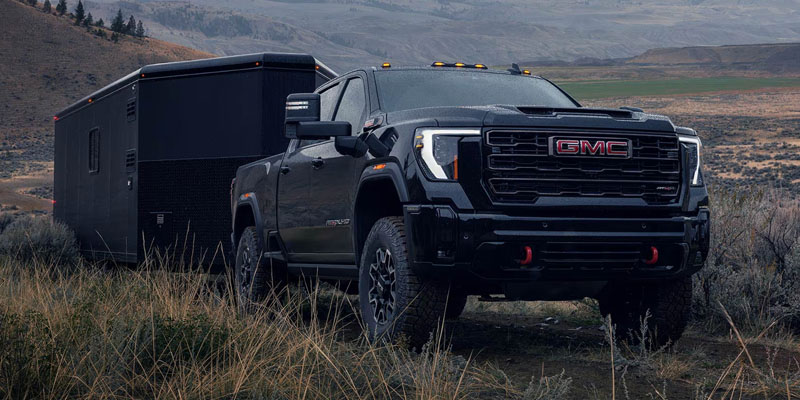
How GMC ProGrade Trailering Works as a Complete System
Many drivers ask what GMC ProGrade Trailering actually is and whether it is just a marketing name for standard towing features. ProGrade Trailering is a fully integrated system that combines multiple technologies to support every stage of towing, from hitching to highway driving.
Instead of operating independently, each component within the GMC ProGrade Trailering system shares data and works together. Cameras provide visual feedback, sensors monitor trailer behavior, and onboard systems adjust braking and power delivery as needed.
This coordination allows the vehicle to respond to towing conditions in real time. For example, if the system detects trailer sway, it can apply selective braking while also adjusting engine output. At the same time, camera views help the driver maintain awareness of the trailer’s position relative to the road.
The result is not just added convenience, but a more controlled towing experience where the vehicle actively supports the driver rather than relying entirely on manual input.
How Hitch Guidance and Hitch Assist Simplify Trailer Connection
Many first-time towing users ask how GMC Hitch Guidance works and whether it actually makes hitching easier. Hitch Guidance is a camera-based system that uses visual overlays to help align the vehicle’s hitch with the trailer coupler.
When reversing toward a trailer, the system displays a camera view with guidelines that show the vehicle’s projected path. This allows the driver to make precise adjustments without needing a second person to guide them.
Hitch Assist builds on this by helping automate parts of the process. In certain configurations, the system can assist with steering inputs to help guide the vehicle into alignment with the trailer.
Together, these systems reduce the trial-and-error typically involved in hitching:
- Drivers can align the hitch more accurately using on-screen guidance
- Fewer adjustments are needed when backing into position
- The need for a spotter is reduced in many situations
For drivers who tow occasionally or are new to trailering, this significantly lowers the barrier to entry.
How GMC Camera Systems Improve Visibility While Towing
Visibility is one of the biggest challenges when towing, especially with longer or wider trailers. Many shoppers ask how GMC towing cameras work and whether they provide meaningful advantages beyond a standard backup camera.
GMC camera systems extend the driver’s field of view by offering multiple perspectives around the vehicle and trailer. These include rear views, side views, and in some cases, composite views that simulate a more transparent look behind the trailer.
This expanded visibility helps drivers:
- Monitor lane positioning while towing
- See around the trailer when changing lanes or merging
- Back up more accurately in tight spaces
By providing a clearer picture of the vehicle’s surroundings, these camera systems reduce blind spots and help drivers make more confident decisions on the road.
How Trailer Sway Control Maintains Stability
Drivers often ask what trailer sway control does and how it works during real towing situations. Trailer sway control is a stability system designed to detect and correct unwanted trailer movement, particularly at higher speeds.
When the GMC system detects sway, it responds by applying targeted braking to specific wheels and adjusting engine power. This helps bring the trailer back into alignment with the vehicle.
The system operates continuously while towing, monitoring for conditions such as crosswinds, uneven loads, or sudden steering inputs that can cause instability.
This matters most in situations like:
- Highway driving at higher speeds
- Passing or being passed by large vehicles
- Driving in windy conditions
By actively correcting instability, trailer sway control reduces the likelihood of loss of control and helps maintain a more predictable driving experience.
Why Towing Technology Matters More Than Towing Capacity Alone
Many buyers focus on towing capacity numbers when comparing vehicles, but those numbers only represent the maximum load under ideal conditions. Real-world towing involves constant adjustments, changing road conditions, and driver input.
GMC towing technology addresses these variables by making towing more manageable rather than simply more powerful.
Key differences between capacity and capability include:
- Towing capacity defines how much weight the vehicle can pull
- Towing technology determines how stable and controlled that load feels
- Integrated systems reduce driver workload and improve confidence
For many drivers, especially those towing regularly or over long distances, the ability to manage a load comfortably is just as important as the ability to move it.
What’s New for 2026 GMC Towing Technology
As GMC continues to refine its towing systems, newer models build on the foundation of ProGrade Trailering with improved integration and usability.
Updates for 2026 focus on enhancing how drivers interact with these systems and how information is presented during towing. This includes refinements to camera clarity, system responsiveness, and how towing data is displayed through the vehicle’s interface.
Rather than introducing entirely new systems, GMC continues to improve how existing technologies work together. This reinforces the idea that towing support is most effective when it functions as a connected system rather than a set of isolated features.
Final Perspective on GMC Towing Technology
GMC towing technology is designed to reduce the complexity of towing by combining multiple systems into a coordinated platform. From hitching assistance to real-time stability control, these features work together to support the driver at every stage.
Understanding how systems like ProGrade Trailering, Hitch Guidance, and trailer sway control function helps clarify what drivers gain beyond raw towing numbers. For those who tow regularly or want a more controlled experience behind the wheel, these technologies provide practical advantages that extend beyond capability into everyday usability.
Connect with us


