


The GMC maintenance schedule gives drivers a clear place to check transmission fluid timing before warning signs appear. Transmission fluid works inside the gearbox every time the vehicle moves, shifts, or holds a selected gear. Therefore, fluid care belongs beside other routine maintenance items, not only emergency repairs. Knowing its role makes service timing and warning signs easier to judge.
What Transmission Fluid Does Inside a GMC
Automatic transmission fluid handles several jobs inside the transmission. It lubricates moving parts, transfers hydraulic pressure, and carries heat away from internal components. Because those jobs happen together, fluid quality matters during every shift.
Hydraulic pressure controls clutches and other internal parts that change gear ratios. The fluid must move through narrow passages while maintaining the correct properties. Therefore, contamination or heat damage can interfere with clean hydraulic operation.
The fluid also reduces friction between moving parts. At the same time, it carries heat toward areas where that heat can leave the transmission. This matters because repeated heat cycles can change the fluid during its service life.
What does transmission fluid do inside your GMC? It supports lubrication, hydraulic pressure, cooling, and gear changes inside the transmission. Those jobs explain why the correct fluid matters for each GMC model.
Different transmissions can require different approved fluids. Therefore, the Owner's Manual should guide fluid type instead of a universal replacement choice.
Signs Your Transmission Needs Inspection
A scheduled fluid service and a diagnostic inspection answer different needs. Routine service follows the GMC maintenance schedule for the exact vehicle. By contrast, new shifting concerns can justify inspection before the next planned service date.
Transmission concerns can show up through changes in how the vehicle engages or shifts. They can also appear through odor, noise, or fluid loss. Therefore, a new symptom deserves attention even when the next service interval is still far away.
Watch for signs such as these:
- Hard or abrupt shifts: A noticeable change in shift quality can point to a fluid, control, or mechanical concern.
- Slow engagement or slipping: Delayed movement after selecting Drive or Reverse can justify a closer transmission inspection.
- Burning odor, unusual noise, or fluid leaks: These signs can indicate heat, fluid loss, or another internal concern.
Hard shifting does not prove that the transmission needs major repair. Several causes can produce similar symptoms. Therefore, diagnosis should come before assumptions about the repair itself.
A transmission temperature warning deserves immediate attention. Excessive heat can damage fluid and internal parts. If a warning appears, follow the vehicle guidance before continuing the trip.
When Transmission Fluid Service Belongs on the Schedule
When should GMC transmission fluid be serviced? The vehicle specific GMC maintenance schedule provides the correct timing for that model and transmission. GMC directs owners to the Owner's Manual because service timing can vary across vehicles.
Generic mileage recommendations can create confusion. A Sierra used for frequent towing may not follow the same maintenance pattern as an Acadia. Therefore, one mileage number should not replace the schedule written for the vehicle.
The Owner's Manual also identifies the approved fluid specification. That matters because transmission designs can use different fluid formulations. Using the specified fluid keeps the service matched to the hardware inside the transmission.
Service history gives the next visit useful context. Keep records of fluid replacement, repairs, warning messages, and unusual shifting concerns. In addition, note whether the vehicle spends substantial time towing or carrying heavy loads.
If the service history is incomplete, a technician can review the vehicle before recommending the next step. The goal is to base maintenance on the exact GMC, its transmission, and its documented history.
How Towing Changes Transmission Stress
Towing asks the transmission to move more weight during acceleration, climbing, and speed changes. That added load can produce more shifting and more heat. Therefore, towing deserves a separate maintenance discussion for Sierra owners.
Tow Haul Mode changes transmission operation during trailer or heavy load driving. On current Sierra models, the mode raises shift points and changes downshift timing. Those changes help the transmission manage the added load across changing road grades.
Heat remains one of the central concerns during repeated towing. Transmission fluid carries heat while also lubricating and supplying hydraulic pressure. Consequently, sustained heavy work can place more demand on the fluid.
Before frequent towing, review several items with the GMC maintenance schedule and Owner's Manual:
- Fluid service history: Confirm when the transmission fluid was last replaced and whether the next interval is approaching.
- Warning messages and temperature: Do not ignore transmission temperature alerts or new shift changes during towing.
- Trailer and load details: Keep towing weight and driving pattern in mind when discussing service timing with a technician.
Why does towing place more demand on transmission fluid? The transmission works against greater load while managing more heat and shift activity. That combination can justify closer attention to the maintenance schedule.
What Happens During Transmission Fluid Service
Transmission fluid service involves more than pouring new fluid into the vehicle. The exact procedure depends on the transmission and the service instructions for that GMC.
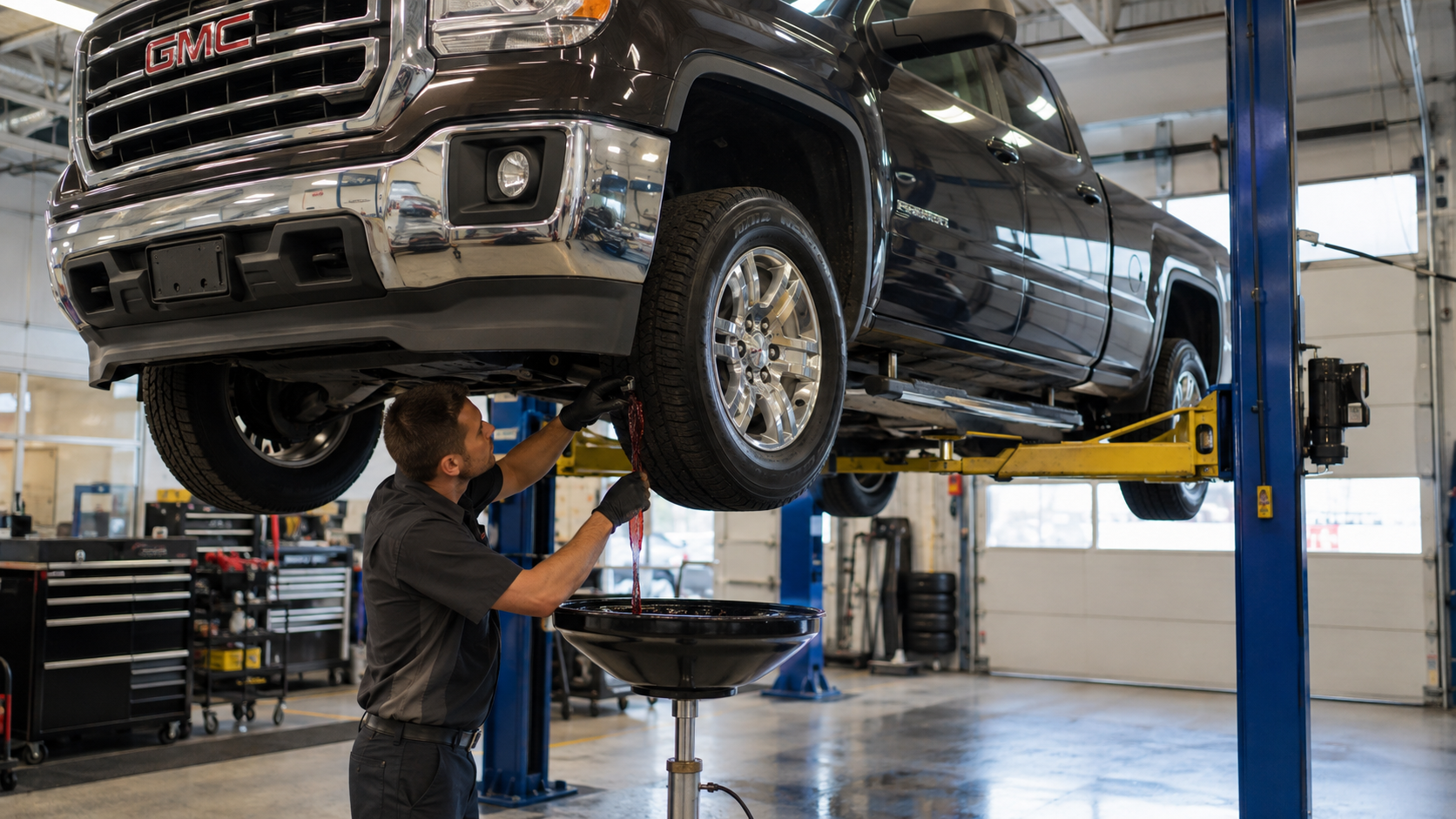
A service visit can include draining old fluid and refilling with the approved specification. Some transmissions also call for filter, gasket, or related service work at certain intervals. Therefore, the procedure should follow the exact service information for the vehicle.
Technicians can also inspect for leaks and review shifting concerns reported by the driver. They may check operation after the fluid service to confirm normal engagement and shifting. If another concern appears, diagnosis can continue separately from routine maintenance.
What happens during transmission fluid service? The service replaces specified fluid and includes the related checks required for that transmission. The technician then verifies operation and looks for concerns that need separate diagnosis.
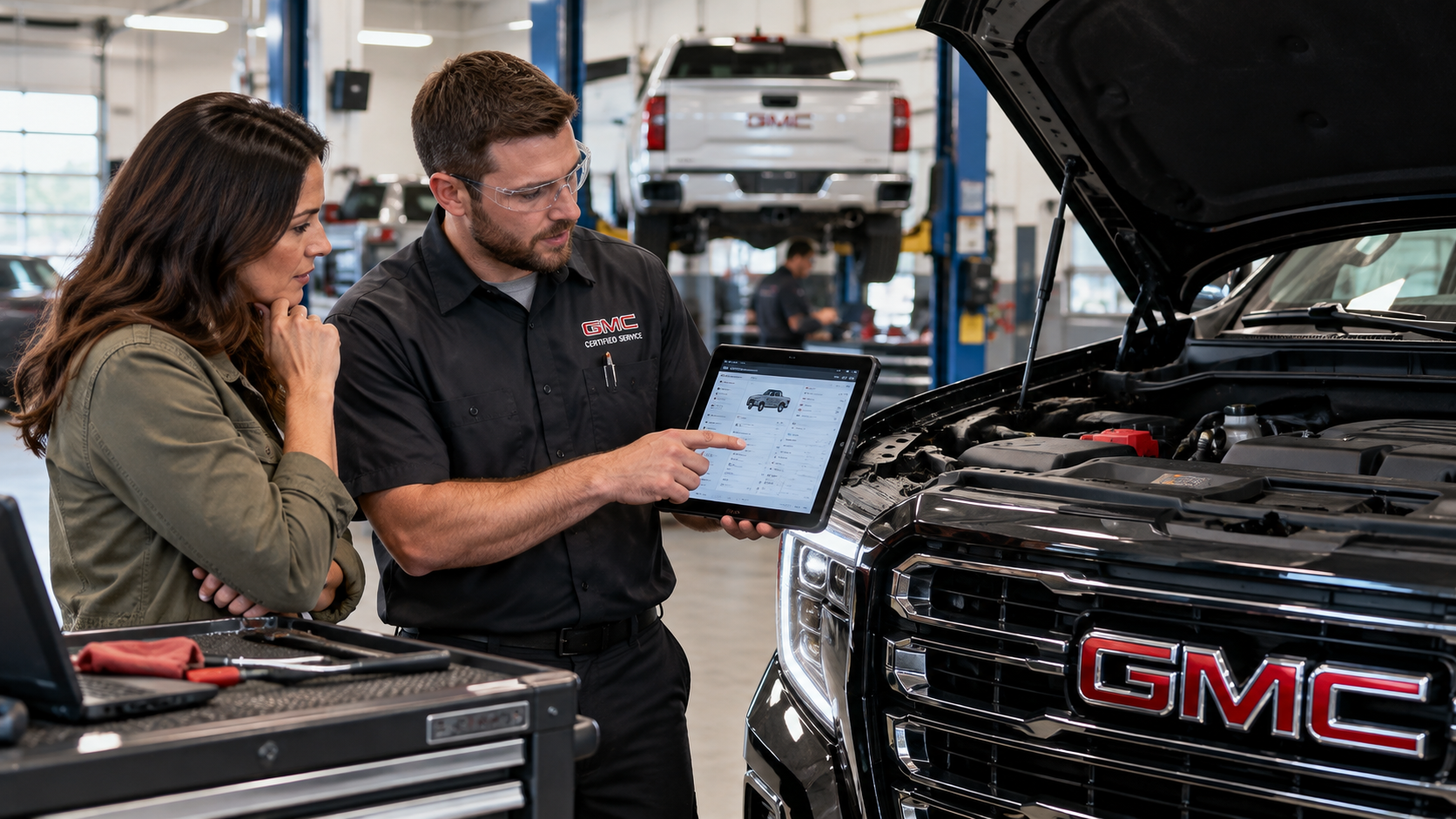
Ross Downing GMC can review the GMC maintenance schedule for your model before service begins. Bring any service records, warning information, and towing details you have. That gives the service team clearer context for the transmission in your vehicle.
Transmission care works best when routine service and new symptoms stay separate in your planning. Follow the correct schedule, use the specified fluid, and address unusual shifting or heat warnings promptly. Those steps give you a clearer path for maintaining the transmission before small concerns become harder to diagnose.