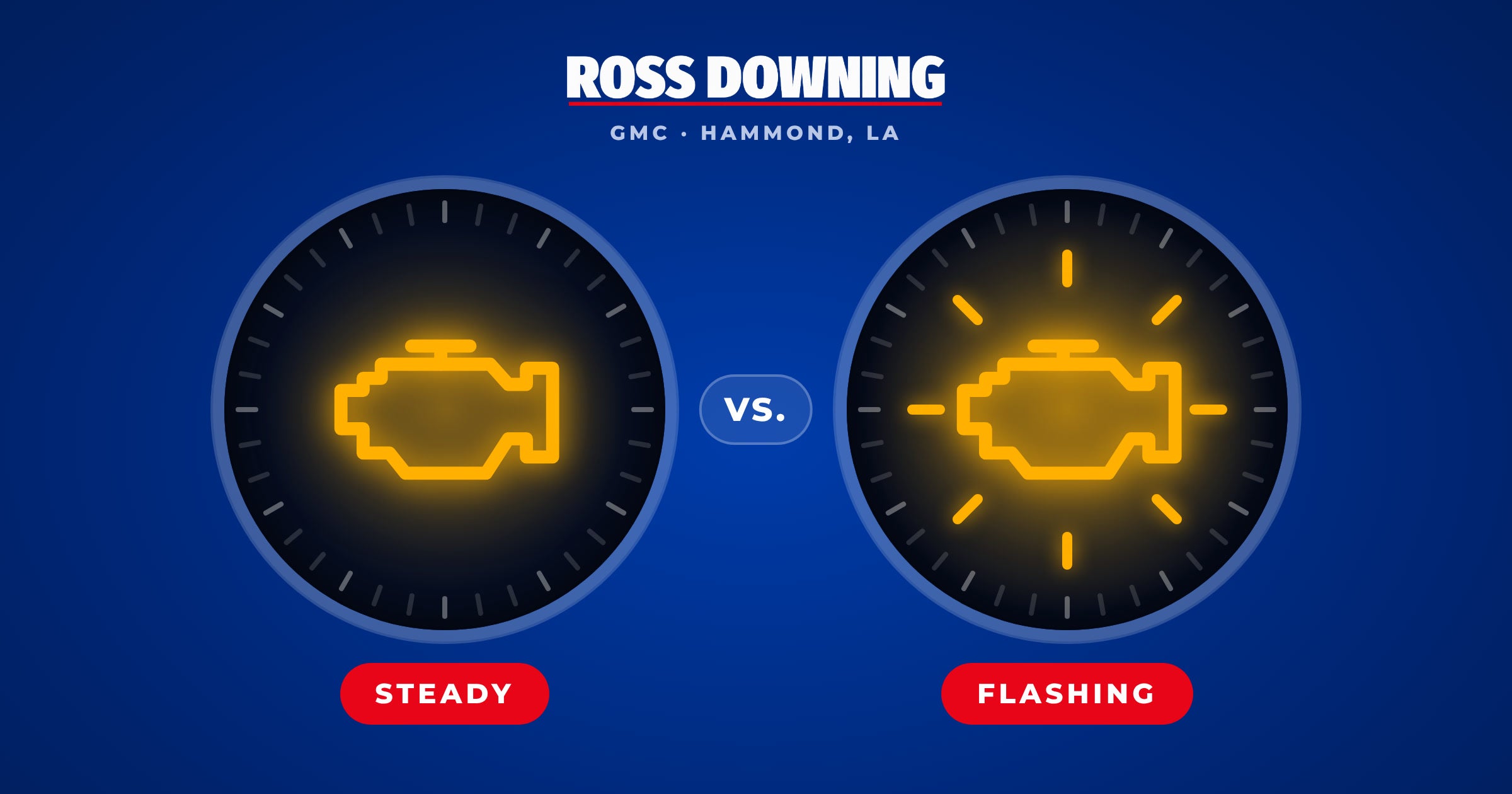


If the check engine light is steady and your vehicle drives normally, you can usually keep driving, but get it checked soon. If the light is flashing, ease off, and if it keeps flashing, pull over safely and call for service. The check engine light is one of the most common reasons drivers around Hammond and the Northshore call our service department. The good news: a lit check engine light is not always an emergency. The key is knowing the difference between a steady light and a flashing one. Steady vs. Flashing Check Engine Light Steady light Flashing light What it usually means The engine computer has detected a problem that isn't usually urgent, such as a loose gas cap or a sensor issue Often a severe engine misfire, which can overheat and damage the catalytic converter Can you keep driving? Usually, if the vehicle drives normally Ease off. If it keeps flashing, pull over safely and call for service How soon to get it checked Soon, before a small problem becomes a bigger one Right away Pull Over Right Away If You Notice Shaking or rough running A loss of power A burning smell Smoke Overheating (temperature gauge climbing or a temperature warning) Any of these along with a check engine light is a sign to stop driving. Find a safe place to pull over, turn off the engine, and call for service or roadside assistance. What to Do When the Check Engine Light Comes On Notice whether it's steady or flashing. That tells you how urgent it is. Check how the vehicle feels. If it drives normally, you can usually continue. If anything feels off, reduce speed and load. Make sure your gas cap is tight. A loose or worn cap is a common, easy fix. The light may take several drives to go off after you tighten it. Have the code read and the problem diagnosed. A diagnostic code points a technician in the right direction, but it doesn't always name the exact failed part. A proper diagnosis does. Check your owner's manual. Warning lights and recommended steps can vary by vehicle. Common Causes of a Check Engine Light Loose, damaged, or missing gas cap Oxygen sensor issues Spark plugs or ignition coils, which can cause misfires Evaporative emissions (EVAP) system leaks Mass airflow sensor problems Catalytic converter problems, often a result of another issue left unrepaired Even a steady light can point to a problem that gets worse, and more expensive, the longer you wait. Getting it checked early is usually the simplest and most affordable path. Check Engine Light FAQs Can a loose gas cap turn on the check engine light? Yes. A loose or worn gas cap can let fuel vapor escape, and the vehicle's emissions system may flag it. Tighten the cap until it clicks. The light may stay on for several drive cycles before it turns off. If it doesn't go off, have it checked. Will the check engine light turn off by itself? Sometimes. If the condition that triggered it goes away, the light may turn off after several drives. Even then, a diagnostic code may still be stored in the vehicle's computer, so it's worth having it read if the light came on more than once. Is a flashing check engine light worse than a steady one? Yes. A flashing light often means a severe misfire, which can damage the catalytic converter. Ease off, and if it keeps flashing, pull over safely and call for service. Does reading the code tell you exactly what's wrong? Not always. A code tells a technician which system reported a problem, but the root cause can take testing to confirm. That's why a full diagnosis matters before replacing parts. Check Engine Light On? We're Here to Help. Questions about your GMC or any vehicle? Ask the service team at Ross Downing GMC Hammond. Our technicians can read the code, diagnose the problem, and get you back on the road. Schedule Service Or call us at (985) 543-6833 Always follow your owner's manual and your technician's recommendations for your specific vehicle.