

Blog / Hammond GMC Dealer

GMC SUV Lineup for Comfortable Louisiana Road Trips

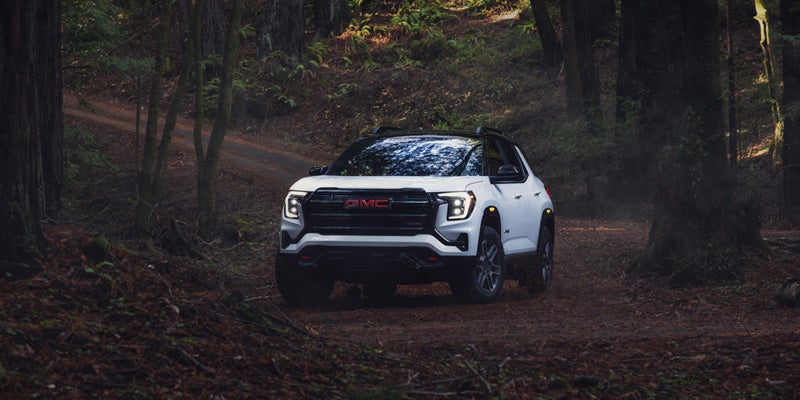
A white GMC SUV drives along a dirt road through a wooded area.

The GMC SUV lineup gives Louisiana travelers four distinct choices for passengers, luggage, highway miles, and trailer needs. Terrain, Acadia, Yukon, and Yukon XL each place space in a different area. Therefore, the right match starts with the seats used during a normal trip. It also starts with the bags, coolers, strollers, or outdoor gear traveling behind them.

How Trip Size Shapes the GMC SUV Choice

Which GMC SUV fits a Louisiana road trip? The answer starts with passenger count, occupied seat cargo room, route length, and trailer needs. Maximum cargo figures can mislead when every rear seat must stay raised. Therefore, compare space behind the last occupied row before reviewing total cargo volume.

A couple traveling to the Gulf may need room for two bags and a cooler. A family of six may need three rows plus space for luggage. In addition, a group towing a boat must account for people, cargo, hitch weight, and trailer equipment.

Use these questions before comparing models:

  • How many seats will remain occupied for most of the trip?
  • Which bags and large items must stay behind the last occupied row?
  • Will the route include a trailer, city parking, or a small garage?

These answers place each SUV in a clearer role. Terrain favors a smaller travel group and easier parking. Acadia adds a third row without full size dimensions. Yukon provides a larger cabin and stronger trailer options. Yukon XL extends cargo room behind the third row.

When Terrain Fits a Louisiana Road Trip

Terrain seats five and uses two seating rows. Current GMC figures list 29.8 cubic feet behind the second row. With that row folded, maximum cargo volume reaches 63.5 cubic feet. Therefore, Terrain can suit couples, smaller households, and travelers with lighter packing plans.

Its smaller exterior also makes city stops easier. Parking near restaurants, hotels, and crowded attractions may require less planning. In addition, a shorter body can make a home garage easier to use.

Terrain works well when every traveler can sit within two rows. It also works when luggage fits behind the second row without blocking rear visibility. However, five occupied seats leave no spare row for extra bags.

Before choosing Terrain, place normal luggage in the cargo area during a dealership visit. Check stroller length, cooler height, and suitcase width. Furthermore, sit in both rows for several minutes. A quick seating check may miss pressure points that appear later on the highway.

When Acadia Provides the Middle Position

Acadia adds three rows and seats up to eight. Current GMC figures list 23 cubic feet behind the third row. Folding the second and third rows opens up to 97.5 cubic feet. Therefore, Acadia creates more seating choices while keeping a midsize footprint.

That 23 cubic foot figure deserves close attention. Eight seating positions do not guarantee room for eight large suitcases. Consequently, a full passenger load may require soft bags, careful packing, or an approved exterior carrier.

Acadia makes sense when the third row serves children, occasional adult riders, or part of a larger group. It also suits households needing three rows during trips but fewer seats during normal errands.

Furthermore, current Acadia trims can tow up to 5,000 pounds when properly equipped. A trailer plan still requires the exact rating, payload label, hitch weight, passengers, and cargo. The published maximum should never replace math for the chosen SUV.

For long trips, test third row entry, charging access, climate flow, and seat position. These details shape comfort after several hours. They also reveal whether Acadia supplies enough room without moving into Yukon dimensions.

When Yukon Supports Larger Groups and Trailers

Yukon is a full size three row SUV with seating for up to eight. Current GMC figures list 25.5 cubic feet behind the third row. Space rises to 72.5 cubic feet behind the second row. With rear seats folded, maximum cargo volume reaches 122.8 cubic feet.

The larger cabin gives adults more room across longer trips. Yukon also offers gasoline and diesel engine choices across the current range. Therefore, it deserves attention from households carrying people, gear, and a trailer.

Still, towing requires more than selecting the largest SUV. Passengers, luggage, accessories, and trailer tongue weight share the payload limit. In addition, engine, drivetrain, axle, hitch equipment, and trim can change the published rating.

Yukon may fit families who use all three rows but carry moderate luggage. It may also suit boat, camper, or utility trailer trips. However, its size asks for more parking space than Terrain or Acadia.

Measure the home garage and frequent parking areas before choosing Yukon. Check overall length, mirror width, and liftgate clearance. These simple measurements can prevent daily frustration after the road trip ends.

When Yukon XL Cargo Space Becomes Necessary

Yukon XL extends the body behind the passenger cabin. Current GMC figures list 41.5 cubic feet behind the third row. That is 16 cubic feet more than Yukon provides in the same area. Therefore, Yukon XL stands apart when every row stays raised.

Maximum cargo volume reaches 144.5 cubic feet with the rear seats folded. Space behind the second row reaches 93.6 cubic feet. These figures support large luggage loads, sports gear, travel supplies, and bulky family items.

The longer body also brings a larger fuel tank in current Elevation and AT4 specifications. Yukon XL lists about 28 gallons, while Yukon lists about 24 gallons. Yet tank size alone does not establish highway range. Engine, drivetrain, speed, load, and trailer use all change fuel stops.

Yukon XL fits groups that need three occupied rows plus substantial luggage room. It also fits households that carry large gear without folding passenger seats. By contrast, the extra length requires more garage depth and parking planning.

A test drive should include a tight parking lot and a familiar route. Additionally, test the rear camera views and liftgate space. The largest cargo area has limited value when the SUV cannot fit its normal parking area.

Match the SUV With the Normal Trip

The final choice should reflect the trip that happens most, not the rare trip that happens once. Terrain serves smaller groups with lighter cargo. Acadia adds three rows while retaining midsize dimensions. Yukon supports larger people, gear, and trailer plans. Yukon XL adds the most room behind an occupied third row.

Before selecting a GMC SUV, confirm these details:

  • Count the seats that will remain occupied during a normal trip.
  • Load the usual bags, cooler, stroller, or sports gear during an in person review.
  • Compare the exact fuel, payload, and trailer figures for the chosen configuration.
  • Measure garage depth, parking space, and liftgate clearance at home.
  • Test charging points, climate controls, cameras, and every seating row.

Ross Downing GMC gives travelers near Hammond a place to compare each model in person. Bring the people and gear that shape the trip whenever possible. Therefore, the cabin test becomes more useful than a simple walkaround.

Louisiana travel may include interstate miles, downtown parking, Gulf trips, or boat launches. Each route places different demands on space and maneuvering. The right GMC SUV should carry the normal group comfortably while keeping luggage, fuel stops, and parking manageable.
Posted in:

Related Posts

New vs Used SUV Comparison for Gonzales GMC Shoppers

New vs Used SUV Comparison for Gonzales GMC Shoppers

A new vs used SUV comparison can start with one simple question. How much vehicle history are you comfortable taking on? A new GMC starts with zero prior owners and full factory coverage. A CarBravo GMC has prior mileage, yet it also passes a formal certification process. Therefore, the decision reaches beyond sticker price alone. Warranty structure, depreciation, financing, mileage, and planned years of ownership all deserve attention. What Does CarBravo Include? CarBravo is GM's certified used vehicle program. It adds inspection, history information, warranty coverage, roadside assistance, and transportation support to eligible used vehicles. Therefore, it sits in a different category from an ordinary used vehicle listing. Every CarBravo vehicle receives a multipoint inspection from a Certified Service technician. Vehicles under 10 model years old with fewer than 100,000 miles receive a 126 point inspection. CarBravo also provides a free CARFAX Vehicle History Report. GM requires participating dealers to complete open safety recalls before listing or selling the vehicle. Those steps give shoppers several items to review before purchase: CarBravo certification includes a technician inspection focused on key parts and vehicle operation. A free CARFAX Vehicle History Report gives prior use and reported history details. Eligible vehicles receive limited warranty coverage, roadside assistance, and transportation support after purchase. Certification does not make every used GMC identical. Mileage, prior use, trim, condition, and service records can still vary from one vehicle to another. Therefore, each CarBravo GMC still deserves its own review. How Does New Vehicle Depreciation Change the Math? A new vehicle starts losing market value from its original new vehicle price after purchase. That early value change can represent a larger share of depreciation during the first years. A used GMC has already moved through part of that period before the next owner purchases it. That does not mean every used GMC will hold its value at the same rate. Model demand, mileage, condition, equipment, and market pricing all play a role. Still, depreciation should remain separate from the amount paid at signing. Consider the timing of your purchase and the years you expect to keep the SUV. A new GMC may offer more years before age and mileage climb. A CarBravo GMC may lower the amount tied up in the initial purchase. Therefore, the more useful comparison looks at purchase price and future value together. A lower price today can change how much depreciation remains ahead. A higher new vehicle price may pair with more factory coverage and zero prior mileage. How Warranty Coverage Differs New GMC and CarBravo warranty coverage should not be treated as the same product. Each path starts from a different point in the vehicle's life. New GMC vehicles registered in the United States include bumper to bumper limited warranty coverage. That coverage lasts 3 years or 36,000 miles, whichever comes first. GMC also lists a 5 year or 60,000 mile powertrain limited warranty for most current models. Certain engines and vehicle classes can use different terms. Eligible CarBravo vehicles under 10 model years old and below 100,000 miles receive separate certified used coverage. CarBravo lists a 12 month or 12,000 mile bumper to bumper limited warranty with no deductible. Coverage terms can interact with any remaining original factory warranty. Before choosing either path, compare the exact coverage attached to the specific vehicle. Review: The date when bumper to bumper coverage ends. The mileage limit attached to each warranty. Any remaining factory powertrain coverage. The CarBravo limited warranty period tied to the certified used vehicle. A newer CarBravo GMC may still carry part of its original factory coverage. An older certified vehicle may rely more heavily on the CarBravo warranty. Therefore, vehicle age and in service date matter during this comparison. Mileage Inspection and Vehicle History Mileage changes the context around a certified used GMC. A vehicle with 15,000 miles presents a different history than one approaching 90,000 miles. The certification process adds inspection, but the odometer still tells part of the story. The CARFAX report can show reported ownership changes, service records, and other recorded events. However, shoppers should pair that report with the physical inspection and dealer records. No single document tells every detail about prior use. Look at tire condition, brake condition, service history, interior wear, and remaining warranty time. Also review whether the trim includes the equipment you want. A lower purchase price can lose appeal if the SUV lacks features you planned to use. The same review applies across the GMC lineup. A Terrain, Acadia, Yukon, or other GMC can make sense through CarBravo when its history fits your plans. Financing and Monthly Cost Financing deserves its own comparison because purchase price does not create the monthly payment by itself. Rate, loan term, down payment, incentives, taxes, and financed amount all shape the final number. New GMC models may qualify for finance programs or incentives that do not apply to used inventory. CarBravo vehicles may start from a lower purchase price, yet used vehicle rates can differ. Therefore, compare complete loan offers instead of comparing sticker prices alone. Before signing, place these figures side by side: Vehicle selling price after applicable incentives. Down payment and trade value applied to the transaction. Annual percentage rate and total loan length. Estimated total paid across the full loan term. This view can reveal a result that the sticker price hides. A lower used price may still carry a different rate. A new GMC may cost more upfront but qualify for another financing structure. Choosing Based on How Long You Plan to Own the GMC A new vs used SUV comparison becomes clearer once you choose an expected ownership period. Time changes the importance of warranty coverage, mileage, depreciation, and financing. A shopper planning several years with the same vehicle may care about starting mileage and remaining warranty time. Someone focused on lowering the initial purchase amount may place more weight on CarBravo inventory. Neither path needs to fit every household. Start with the vehicle itself. Compare mileage, service history, warranty dates, trim equipment, and final financed cost. Then look at the years you expect to keep it. A new GMC gives you a fresh ownership starting point with full new vehicle coverage. CarBravo gives you a certified used path with inspection, history information, and separate warranty protection. Ross Downing GMC can show both paths side by side so you can compare the numbers tied to each vehicle. You can also browse new GMC inventory before your visit.

Sierra 1500 Trims AT4 vs AT4X for Gonzales Drivers

Sierra 1500 Trims AT4 vs AT4X for Gonzales Drivers

Sierra 1500 trims give Gonzales truck shoppers two distinct choices for travel beyond pavement. AT4 already brings substantial trail hardware directly from GMC. AT4X starts with that foundation and adds specialized equipment for tougher terrain. Therefore, the choice involves far more than appearance or trim badging. Suspension hardware, differential control, protection, towing needs, and cabin equipment deserve closer attention. Sierra 1500 AT4 and AT4X Share Strong Trail Hardware AT4 is not a basic Sierra with rugged styling added. It starts with hardware meant for dirt roads, trails, steep grades, and uneven surfaces. Therefore, understanding that foundation makes the AT4X upgrades much easier to judge. Both trucks receive a factory installed two inch suspension lift. That added ride height provides more clearance beneath the truck when terrain becomes rough. Both also include Hill Descent Control for slower travel down steep grades. The GMC Sierra 1500 AT4 uses a two speed Autotrac transfer case. Low range gearing gives the driver another tool for slow travel across difficult terrain. Underbody skid plates also protect important areas below the truck from contact with rocks or trail debris. AT4X retains the core AT4 equipment while changing several important components. Therefore, choosing AT4X is less about gaining basic trail readiness. The decision centers on how specialized the hardware needs to become. Before comparing the upgrades, consider what both trucks already bring: Both receive a factory installed two inch lift for increased clearance beneath the truck. Both include four wheel drive equipment intended for travel on loose or uneven surfaces. Both include underbody protection that shields important components during trail travel. For many drivers, that shared foundation may already cover dirt roads, hunting property, campsites, and muddy access routes. However, harder terrain places different demands on suspension and traction hardware. What Does AT4X Add Beyond Sierra AT4? AT4X adds specialized dampers, dual electronic lockers, and stronger front protection beyond the core AT4 package. The suspension change is one of the clearest mechanical differences between these Sierra 1500 trims. AT4 uses Rancho monotube shocks with its factory lift. The monotube layout controls spring movement as each tire travels over bumps, dips, and broken surfaces. Therefore, the truck can keep its trail focused stance while still handling normal road travel. AT4X replaces those Rancho shocks with Multimatic DSSV dampers. DSSV hardware controls fluid through precisely shaped spool valves inside each damper. That design gives engineers tighter control over damping forces through different suspension movements. What does that mean from behind the wheel? The DSSV setup can manage repeated suspension movement with greater precision across rough trail sections. Therefore, AT4X targets drivers who expect more difficult terrain or longer stretches away from pavement. The difference becomes clearer when the trail keeps changing. A shallow dirt road may place limited demands on the shocks. Repeated ruts, washouts, rocks, and uneven climbs ask much more from the suspension. However, specialized dampers do not make AT4 irrelevant. Rancho monotube shocks still give AT4 dedicated hardware for travel beyond paved roads. The real question is how far the truck needs to go beyond that starting point. When Do Front and Rear Lockers Matter? Front and rear electronic lockers can send both wheels on each axle into the same rotation pattern. This matters when traction becomes uneven across the truck. AT4 uses an automatic locking rear differential. When rear wheel speeds differ enough, the unit can lock the rear axle. That action helps both rear wheels contribute when one tire loses grip. AT4X takes another approach with selectable electronic lockers at both axles. The driver can lock the front and rear differentials when the terrain calls for that response. Therefore, all four wheel positions can work together more directly across a difficult obstacle. Imagine one front tire climbing a rock while another reaches loose soil. A second axle may also sit at an awkward angle. In that situation, managing traction at both axles gives the driver more direct control. The mechanical distinction can be summarized clearly: AT4 uses an automatic locking rear differential that responds when rear wheel speeds separate. AT4X adds selectable electronic locking differentials at both the front and rear axles. Dual lockers matter most when steep, loose, rocky, or uneven terrain reduces grip at several tires. However, most paved driving will not call for locked differentials. A shopper who rarely leaves maintained roads may use that hardware far less. Someone traveling through difficult trails may place much greater value on it. Protection Tires and Trail Hardware Suspension and traction do not tell the entire AT4X story. Physical protection also separates the two Sierra trims once terrain becomes more demanding. AT4 already includes skid plates beneath the truck. Those plates provide a barrier between trail debris and important mechanical components. Additionally, available off road tires can add tread suited to loose surfaces. AT4X adds an AEV stamped steel front bumper with front winch provisions. GMC also equips it with a stamped boron steel front approach skid plate. Therefore, the front of the truck receives stronger hardware for difficult terrain. That front protection matters when approaching rocks, deep ruts, or abrupt changes in trail height. The bumper shape can also support a steeper approach without the lower front fascia meeting the ground first. The AT4X AEV Edition takes this direction further with specialized AEV hardware. However, a driver should first consider whether those parts match planned trips. A heavily modified trail setup provides little value when the truck spends nearly every mile on pavement. Tire choice deserves the same attention. Aggressive tread can add grip in mud and loose soil. By contrast, road manners and tire noise may matter more during long highway drives. Towing Cabin Equipment and Price The price difference between AT4 and AT4X reflects more than suspension parts. AT4X also adds cabin equipment and specialized exterior hardware. For 2026, GMC lists AT4 with a starting price of $67,000. AT4X starts at $79,600. That creates a starting difference of $12,600 before other choices change the final price. Therefore, the decision should examine what that money adds. Multimatic DSSV dampers and dual electronic lockers account for major mechanical upgrades. The AEV front hardware adds another physical distinction. AT4 still brings heated and ventilated leather front seating surfaces. It also includes the 13.4 inch GMC infotainment display and digital driver information screen. AT4X adds more elaborate front seating equipment. GMC equips AT4X with 16 way heated and ventilated front seats with massage functions. Consequently, some of the higher price supports cabin equipment rather than trail hardware alone. Towing also deserves attention before choosing either trim. GMC lists AT4 with available towing up to 9,000 pounds when properly equipped. Trailer weight, engine choice, configuration, and equipment can change the final rating. Therefore, shoppers who tow regularly should confirm the exact truck specification before choosing a trim. Trail hardware and trailer requirements solve different problems. Matching the Sierra Trim to How You Drive Sierra 1500 trims AT4 and AT4X begin from the same rugged branch of the GMC lineup. However, they serve different levels of trail demand. AT4 already brings the lift, transfer case, skid plates, Rancho shocks, and rear locking hardware many owners want. AT4X moves farther with DSSV dampers, dual electronic lockers, and stronger front protection. Start by thinking about where the truck will spend most of its miles. Maintained dirt roads and occasional trails place different demands on hardware than rocky routes or deep ruts. Additionally, regular towing can shift attention toward configuration and rated trailer weight. Price deserves the same careful review. The AT4X upgrades are substantial, but they make the most sense when the driver will use them. AT4 can provide a strong middle ground for mixed road, trail, and towing use. A side by side inspection can make those distinctions easier to see. Ross Downing GMC can walk Gonzales shoppers through available Sierra AT4 and AT4X configurations before a final selection. You can also explore current new GMC inventory before visiting the dealership.

New GMC Acadia vs Chevrolet Traverse for Louisiana Families

New GMC Acadia vs Chevrolet Traverse for Louisiana Families

New GMC Acadia vs Chevrolet Traverse for Louisiana Families The new GMC Acadia gives Louisiana families a three row SUV with generous passenger room and flexible seating choices. Chevrolet answers with the Traverse, another spacious three row option from General Motors. Because both models share similar dimensions and power, shoppers may wonder where the differences start. The answer lies in seating layouts, cargo use, cabin technology, and trim direction. Therefore, comparing those areas can make the choice much clearer. GMC Acadia and Chevrolet Traverse Model Clarification Is there a Chevrolet Acadia? No, Acadia belongs to GMC, while Traverse carries the Chevrolet badge. The similar market position can cause confusion when families begin comparing three row SUVs. However, the two models make sense as direct cross shopping choices. The new GMC Acadia uses a 2.5 liter turbo engine with 328 horsepower and an eight speed automatic transmission. Chevrolet also gives the Traverse a 2.5 liter turbo engine rated at 328 horsepower. Therefore, engine output alone does not separate these two SUVs very much. Both models also offer seating for up to eight people in selected layouts. In addition, each model provides three rows and substantial cargo room. That shared foundation shifts attention toward cabin setup, trim selection, and how each household plans to use the space. Is the GMC Acadia the Same Size as the Chevrolet Traverse? The two SUVs are very close in overall size. The current Acadia measures roughly 204 inches long and uses a 120.9 inch wheelbase. The Traverse sits in nearly the same size range. Therefore, neither model creates a major size advantage simply through exterior length. That similarity matters when parking, loading passengers, or planning garage space. A family moving from a smaller crossover will notice the larger three row footprint in either model. However, the choice becomes more specific once seating position and cargo needs enter the discussion. The new GMC Acadia also offers generous second row and third row passenger space. GMC lists 41.5 inches of second row legroom and 32.1 inches in the third row. Those figures support adult friendly use across more than the first row. Still, families should sit in each row before choosing a trim or seating layout. Which SUV Works Better for Seven or Eight Passengers? Both models can carry up to eight people in selected configurations. The better layout depends on how frequently every seat will see regular use. However, the key decision starts with the second row. The new GMC Acadia Elevation can seat up to eight with a second row bench. GMC also offers seven passenger layouts with second row captain chairs. AT4, Denali, and Denali Ultimate models seat up to seven. Therefore, shoppers should compare how each layout fits their normal passenger routine. A second row bench provides another seating position and may suit households that regularly carry eight people. Second row captain chairs create a center aisle that can make third row access easier for frequent passengers. Families using child seats should test access to each row before selecting a seating configuration. The Chevrolet Traverse also offers seating for up to eight people. Several configurations use seven passenger layouts with second row captain chairs. In addition, selected layouts can provide the extra seat through a second row bench. Consequently, passenger count may matter more than a small difference in exterior measurements. A household carrying six people every day may evaluate these layouts differently from one that only uses the third row occasionally. Cargo Space With Every Row in Use How much cargo room remains when all three rows stay upright? The Acadia provides 23.0 cubic feet behind the third row. It also offers 57.3 cubic feet behind the second row and 97.5 cubic feet behind the first row. Chevrolet lists up to 98 cubic feet of maximum cargo volume for the Traverse. Those numbers place the two SUVs very close at maximum cargo capacity. However, maximum volume does not tell the whole story for a family carrying passengers every day. The space behind row three can matter more during school trips, grocery runs, or weekend travel. Moreover, a stroller, sports bags, coolers, or luggage may need to fit without folding the third row. Therefore, families should examine the cargo floor with the seats positioned as they normally use them. That check can reveal more than a small difference in published maximum volume. The new GMC Acadia also offers power folding features on certain trims. Those controls can make seat changes easier when cargo needs shift during the week. Still, the physical layout should match the household before convenience features become the deciding factor. Trim and Technology Differences The largest separation appears once the comparison moves past engine output and basic size. GMC structures the Acadia lineup around Elevation, AT4, Denali, and Denali Ultimate. Chevrolet offers Traverse trims such as LT, Z71, RS, and High Country. Those trim families give shoppers several areas to compare beyond horsepower and exterior dimensions. Each one places different emphasis on seating, cabin equipment, trail hardware, or technology. The new GMC Acadia includes a 15 inch diagonal infotainment display for navigation, media, and connected features. The Chevrolet Traverse uses a 17.7 inch center touchscreen, creating a visible difference in dashboard layout. Acadia AT4 adds trail focused equipment and standard all wheel drive for drivers who plan to leave paved roads. Denali and Denali Ultimate place more attention on cabin materials, seating features, and added technology. By contrast, Chevrolet uses Z71, RS, and High Country for distinct trail, style, and upper trim directions. Both models can also offer Super Cruise on selected configurations. In addition, the Acadia can tow up to 5,000 pounds when properly equipped. Families who plan to tow should confirm the required package before purchase. Therefore, trim and equipment details deserve the same attention as headline specifications. Choosing a Layout Around Your Household The new GMC Acadia and Chevrolet Traverse serve similar household needs, but they organize those needs differently. One family may need eight seats for frequent carpools. Another may prefer captain chairs and easier third row access. Still another may place more weight on screen layout, trail hardware, or cabin materials. Which details should guide the final choice? Start with the number of seats you use most weeks. Then check cargo space with those seats left in place. After that, compare the trims that include the features you plan to use. Because the core engine output and overall size remain close, small configuration details carry more weight here. Therefore, a side by side visit can answer questions that specifications cannot. Ross Downing GMC can guide families through Acadia seating, cargo room, and available trim features in person. You can also explore current new GMC inventory before your visit.